
Table of contents
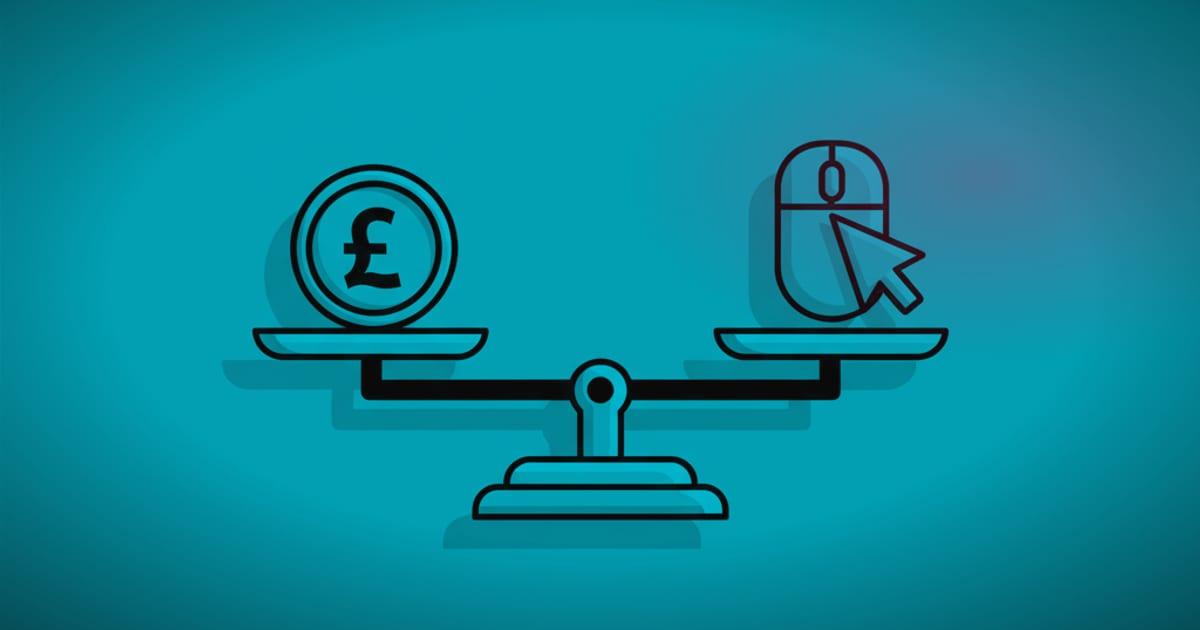
Google Ads are worth it for a small business when the profit from one new job or client is bigger than the cost of the clicks it takes to win one. You can work that out before spending anything, from the profit on a typical job, how many visitors get in touch and how many enquiries you win. If the most you can afford per click is well above what clicks cost for your searches, ads are worth trying; if it is below, they lose money however well they are run.
How do you work out if Google Ads are worth it?
Work backwards from the profit on one job to the most you can pay for a click, then compare that with what clicks cost for your searches. You need three numbers from your own records:
- Profit on a typical job or client. What you keep after materials, wages and fuel, not the invoice total.
- Visitors who get in touch. Out of every ten people who land on your page, how many call, message or fill in the form.
- Enquiries that become work. Out of every ten enquiries, how many you quote for and win.
Say Tom runs a two-van roofing firm in Exeter. A typical repair is worth eight hundred pounds, and after materials and wages he keeps 40% of it: three hundred and twenty pounds profit. He guesses one visitor in ten will ring or fill in his form, and he wins one enquiry in three.
That means ten clicks for each enquiry, and three enquiries for each job: 30 clicks to win one repair. Divide the profit by the clicks, and the most Tom can pay for a click without losing money is about ten pounds sixty-seven.
What is the most you can pay for a click?
The break-even click price is the profit per job divided by the clicks it takes to win one. Paying that much means the ads earn nothing, so set a lower target. The method in our client value calculator spends no more than a third of the profit on winning the work, so two thirds stays with the firm. For Tom, a third of three hundred and twenty pounds is about one hundred and seven pounds per job, which over 30 clicks is about three pounds fifty-six a click.
Now compare that with the market. Our guide to Google Ads costs puts a "roof repair" click at about six pounds fifty, going by Google's own estimates in October 2026. At that price Tom's 30 clicks cost about one hundred and ninety-five pounds, leaving him one hundred and twenty-five pounds from each job. The ads would pay, but they would take more than his target share.
This table shows how each number moves the most Tom can pay a click.
| What changes | Clicks to win a job | Break-even click price | Click price that keeps two thirds of the profit |
|---|---|---|---|
| Tom's starting guess: 1 visitor in 10 enquires, wins 1 in 3 | 30 | about ten pounds sixty-seven | about three pounds fifty-six |
| A clearer page: 3 visitors in 20 enquire | 20 | sixteen pounds | about five pounds thirty-three |
| A weaker page: 1 visitor in 20 enquires | 60 | about five pounds thirty-three | about one pound seventy-eight |
| Answers every call and wins 1 enquiry in 2 | 20 | sixteen pounds | about five pounds thirty-three |
| Aims at bigger jobs: eight hundred pounds profit each | 30 | about twenty-six pounds sixty-seven | about eight pounds eighty-nine |
The page the ad sends people to matters as much as the ad: halve how many visitors call and you halve what you can afford. Answering the phone is free, and a firm that misses calls pays for clicks it then throws away.
What if one client is worth more than one job?
Use the profit over the whole time a client stays with you. For firms whose clients pay every month for years, that changes the answer.
Say Helen runs a small accountancy practice in Reading. A typical small business client pays her one hundred and fifty pounds a month and stays about six years, and half of that is profit. Over six years the client pays ten thousand eight hundred pounds, and Helen keeps five thousand four hundred.
A third of that is one thousand eight hundred pounds, the most she would spend to win one client. If she wins three enquiries in ten, she can afford about five hundred and forty pounds for each enquiry. If one visitor in ten gets in touch, that is fifty-four pounds a click. At that level, the click price matters far less than whether the enquiries are the kind of client she wants.
The catch is cash flow: in year one that client pays Helen one thousand eight hundred pounds and she keeps nine hundred, so the money comes back over years. The calculator has starting figures for several kinds of firm, and you can change them all.
What conversion rate should you assume?
Use your own figure as soon as you have one, and a cautious guess until then. Google's help page defines conversion rate as "The average number of conversions per ad interaction, shown as a percentage" (checked on 12 November 2026).
Published averages give a rough range, but they are American and they vary a lot by trade. WordStream's 2026 benchmarks, from over 13,000 US campaigns between April 2025 and March 2026, put the average conversion rate across industries at 8.18%. LocaliQ's 2025 report on US home services campaigns put roofing and gutters at 3.70% and cleaning at 17.65%.
So one visitor in ten is a fair starting guess for many local services, and large jobs such as roofing may be well below it. Once your ads have run with calls and forms counted, redo the sum with your real figure.
How much do you need to spend to find out?
Enough to get about ten enquiries, which is the fewest we would judge a campaign on. At one enquiry for every ten clicks, that is about 100 clicks. For Tom at about six pounds fifty a click, the test costs about six hundred and fifty pounds, and should bring around three jobs if his guesses hold.
Google sets no minimum. Its help page says "There's no minimum spending commitment, and you set and control your own budget" (checked on 12 November 2026). The risk runs the other way: a budget that buys 20 clicks a month takes five months to tell you anything.
When are Google Ads not worth it?
Google Ads are not worth it when the sum cannot work, or when nothing is in place to check it:
- The job is too small. If a gutter clear leaves sixty pounds profit and takes 30 clicks to win, even three pounds a click costs ninety pounds per job. Small jobs only pay when they turn into bigger ones.
- There is no page worth landing on. Ads that send people to a slow home page with no phone number at the top buy clicks that never ring.
- Calls and forms are not counted. Without that, you cannot do the sum at all, and Google cannot learn which clicks bring work.
- Nobody can answer the phone. An unanswered call still costs the click, and the customer rings the next firm.
- You are booked up for months. The ads buy enquiries you cannot take.
- Nobody searches for it. Google's Keyword Planner, inside a Google Ads account once billing details are entered, estimates monthly searches and what it costs for an ad to show on them.
Owners on forums who call ads "a bottomless pit" usually describe the same three faults: calls from outside their area, enquiries for work they do not do, and no record of which clicks became jobs.
If you are weighing ads against being found for free, our comparison of Google Ads and SEO covers which to do first.
How do you know if your ads are paying once they run?
Count every call and form from the ads, then mark which enquiries became paid work. That gives a real cost per job to replace your guesses.
Google Ads can count a call from an ad as a conversion when it lasts longer than a minimum length you set, according to its help page on call conversions (checked on 12 November 2026). Our guide to Google Ads conversion tracking shows how to count calls and forms for a service business.
Once you know the most you will pay for an enquiry, it can become the target for Google's Target CPA bidding, which sets bids automatically to win as many enquiries as possible around that cost. Its help page warns that "Some conversions may cost more than your target and some may cost less", so judge it over a month, not a day.
Common questions
Why is Google advertising so expensive?
Each click is sold in an auction, so the price is set by what rival firms are willing to pay. Urgent work and jobs worth a lot per customer cost most, because firms can afford to pay more to win them. A high click price is only a problem if the profit per job cannot cover the clicks it takes to win one.
Is Google Ads worth it with a small budget?
It can be, if the budget is aimed narrowly: one service, your own area, and the hours someone can answer the phone. Spread across every service and a wide area, it buys too few clicks for any one search to tell you anything. Aim the first budget at the job with the best profit and test that.
Why am I getting calls from outside my area?
Usually the location setting. Google recommends "Presence or interest" for Search, which can reach people who have shown interest in your area without being in it. "Presence" is for when, in Google's words, "You only want to target users in specific locations" (checked on 12 November 2026), which suits a firm that only works its own patch.
What to do this week
Write down the profit on your most common job, how many enquiries you win out of ten, and a cautious guess at how many visitors get in touch. Divide the profit by the clicks it takes to win one job and compare it with the click prices in our cost guide. Our guide to Google Ads for small businesses covers the next steps if the sum works. If it does not, fix the page or aim at bigger jobs before spending a pound on clicks.